How to Convert HEIC to JPG on Windows
Someone sent you photos from an iPhone, Windows shows a row of blank thumbnails, and double-clicking offers to sell you something from the Microsoft Store. Here is why, and four ways round it.
Updated September 2026
The short answer: Windows cannot decode HEIC on its own. It needs the HEIF Image Extensions from the Microsoft Store, which in turn need the HEVC Video Extensions that Microsoft charges for. The free route is to convert the files instead: open a browser-based converter, drop the HEIC files in, and download JPGs. Nothing is installed and nothing is uploaded.
Why Windows will not open a HEIC file
HEIC is an image wrapped in the HEIF container and compressed with HEVC, the same codec as H.265 video. HEVC is covered by a large patent pool, so anyone shipping a decoder has to license it. Microsoft's answer was to split the support into two Store packages: HEIF Image Extensions, which is free, and HEVC Video Extensions, which is not — and the free one does not work without the paid one for most files.
That is the whole problem. It is not that your PC is old or that the file is broken. Windows simply does not carry the decoder, and the official way to add it costs money for something your phone does for free.
Option 1 — Convert in your browser (nothing to install)
This works on any Windows machine, including a locked-down work laptop where you cannot install anything, because the decoding happens inside the browser using its own HEIC support. No file is sent to a server.
- Open the HEIC to JPG converter in Edge, Chrome or Firefox.
- Drag the .heic files onto the page, or click to browse. A whole camera-roll export at once is fine.
- Leave quality at 90 or above — HEIC files hold a lot of detail and it is worth keeping.
- Convert, then download the files individually or as a single ZIP.
Option 2 — Buy the Microsoft codec
If you receive HEIC files constantly and want Windows itself to display them, the HEVC Video Extensions package in the Microsoft Store is the official route. Install HEIF Image Extensions first, which is free, then HEVC Video Extensions, which Microsoft charges a small fee for. After that, File Explorer shows thumbnails and Photos opens the files normally.
Worth knowing: some PC manufacturers pre-license HEVC, in which case a device-specific version appears in the Store at no charge. Search the Store for "HEVC" and see which version you are offered before paying.
Option 3 — Stop the iPhone sending HEIC in the first place
If the photos come from someone you can ask, or from your own phone, this is the permanent fix and it takes ten seconds on the phone.
- On the iPhone, open Settings, then Camera, then Formats, and choose Most Compatible. The camera saves JPG from then on.
- Then open Settings, then Photos, scroll to Transfer to Mac or PC, and choose Automatic. That converts on export rather than sending the raw HEIC.
- Most Compatible roughly doubles the storage each photo uses — that is the trade.
- Photos already taken stay HEIC. Only new ones are affected.
- The Transfer setting matters even if you leave the camera on High Efficiency, because it converts during the transfer.
Option 4 — Desktop software
Several Windows applications read HEIC without the Store codec because they bundle their own decoder. Recent versions of Adobe Lightroom and Photoshop handle it, and so do a number of free image viewers. This is worth it if you already use one of them; it is a lot of installation if you do not.
Which route to pick
| Situation | Best route |
|---|---|
| A handful of photos, one time | Convert in the browser |
| A work laptop you cannot install on | Convert in the browser |
| You receive HEIC constantly | Buy the Store codec |
| The photos are from your own iPhone | Change the Camera format setting |
| You already run Lightroom or Photoshop | Open them there and export JPG |
| Hundreds of files at once | Convert in the browser and take the ZIP |
Do not rename the extension
Renaming a .heic file to .jpg changes the label and nothing else. The bytes inside are still HEVC, so Windows still cannot decode it — and now the error is more confusing, because everything claims it is a JPEG. The file has to be genuinely re-encoded.
Frequently asked questions
Why does Windows charge for HEVC Video Extensions?
HEVC is covered by a patent pool and Microsoft has to pay licence fees for every decoder it ships. It passes that cost on as a small Store charge. HEIF Image Extensions is free but relies on the HEVC package for most files, which is why installing only the free one usually does not help.
Can I open HEIC on Windows 10 as well as 11?
Yes, and the situation is identical on both versions. The same two Microsoft Store packages apply, browser-based conversion works the same way, and changing the iPhone camera format fixes it at source either way. Nothing here is specific to Windows 11.
Will converting to JPG lose quality?
A little. HEIC is 10-bit and JPG is 8-bit, and JPG compression is lossy. At quality 90 or above the difference is not visible on any normal screen or print. What definitely does not survive is the container's extras: Portrait-mode depth maps and Live Photo motion have nowhere to go in a JPG.
How do I convert a whole folder of HEIC files at once?
Drop them all onto the browser converter together — it handles hundreds in one go and gives you a single ZIP. There is no per-file or per-batch limit because the work happens on your own machine.
Is it safe to use an online HEIC converter?
It depends entirely on whether the file is uploaded. Many converters send your photos to a server, process them there and delete them later, which you have to take on trust. This one decodes in your browser — load the page, disconnect from the internet, and it still converts, which is the simplest way to verify the claim.
Why do my HEIC files show as blank thumbnails in File Explorer?
File Explorer generates thumbnails using the same codec it would use to open the file. With no HEIC decoder installed it has nothing to draw, so you get a generic icon or a blank tile. Installing the codec or converting the files both fix it.
Keep reading
- Convert HEIC to JPG now
- How to convert HEIC to JPG on a Mac
- Batch convert hundreds of HEIC files at once
- Stop your iPhone saving HEIC
- Fix "file type not supported" upload errors
- JPG vs JPEG vs JFIF explained
- Convert HEIC to PNG instead
Gear we recommend for this workflow
As an Amazon Associate we earn from qualifying purchases. Affiliate disclosure.

Dell XPS 13 9345 Laptop, 13.4" FHD+ 120Hz, Snapdragon X Elite, 32GB/1TB | Premium Business AI PC, > Intel Ultra 7-155H, 27-Hour Battery Life, Copilot+ PC, Backlit, Fingerprint, Wi-Fi 7, Win 11 Pro
Best Windows laptop for creative work
$1,489.99
Check price on Amazon
Anker USB C Hub, 5-in-1 USBC to HDMI Splitter with 4K Display | 85W Max PD, 1 Powered USB-C 5Gbps & 2 Powered USB-A 3.0 5Gbps Data Ports, for MacBook Pro, MacBook Air, Dell and More (Black)
Best for connecting cards, drives and displays
$24.99
Check price on Amazon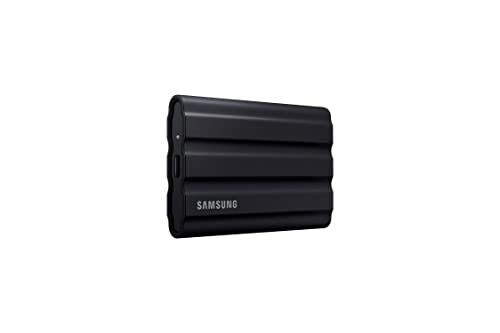
Samsung T7 Shield Portable SSD 1TB, USB 3.2 Gen 2, Up to 1,050 MB/s | Rugged, IP65 Water Resistant, External Solid State Drive for Photographers, Content Creators and Gaming (MU-PE1T0S/AM), Black
Best for photographers backing up thousands of RAW files
$267.00
Check price on Amazon
OCQOTAT Photography Cheat Sheet for DSLR Camera Accessories for Canon Nikon Sony,Quick Reference Cards Photographers Book for Beginners,Settings,Exposure, Modes,Composition,Lighting, etc.4×3 Inch
Best for learning photography basics
$9.99
Check price on AmazonPrices as of Oct 26, 2026, 4:45 AM UTC. Product prices and availability are accurate as of the date/time indicated and are subject to change. Any price and availability information displayed on Amazon.com at the time of purchase will apply to the purchase of this product.
Image Optimization Tips
Get weekly tips on image formats, compression, and web performance.
No spam, unsubscribe anytime. We respect your privacy.