Pixels to Inches Converter
Turn pixels into inches, centimetres or millimetres — and back — at any PPI, with the paper sizes people ask about most worked out in pixels.
Updated October 2026 · Free · Works entirely in your browser
The formula
inches = pixels ÷ PPI, and pixels = inches × PPI. For centimetres multiply the inches by 2.54; for millimetres by 25.4. Those two factors are exact — the inch has been defined as 25.4 mm since 1959 — so the only number you ever have to choose is the PPI.
That choice is the whole story. A pixel is a sample, not a measurement, so “how many inches is 1920 pixels?” has no single answer: it is 6.4 inches printed at 300 PPI, 20 inches on a web page at 96 CSS pixels per inch, and 26.7 inches if a program assumes 72.
Which PPI to use
| PPI | Where it comes from | Use it for |
|---|---|---|
| 96 | The CSS reference pixel (1 px = 1/96 in) | Web layouts, Word and Google Docs page sizes, Windows at 100% scaling |
| 72 | Original Macintosh screens and PostScript points (1 pt = 1/72 in) | PDF page sizes and the default many cameras and editors write into files |
| 150 | Half of print resolution | Posters, banners and anything viewed from a metre or more |
| 300 | Roughly what the eye resolves at reading distance | Photo prints, flyers, books, business cards |
| 600 | Office laser printers and scanners | Line art, signatures and documents you will scan back in |
Paper sizes in pixels
Rounded to the nearest whole pixel. ISO sizes such as A4 are defined in millimetres, so they never land on a round number of pixels.
| Paper | 72 PPI | 96 PPI | 150 PPI | 300 PPI |
|---|---|---|---|---|
| US Letter (8.5 × 11 in) | 612 × 792 | 816 × 1056 | 1275 × 1650 | 2550 × 3300 |
| US Legal (8.5 × 14 in) | 612 × 1008 | 816 × 1344 | 1275 × 2100 | 2550 × 4200 |
| Tabloid (11 × 17 in) | 792 × 1224 | 1056 × 1632 | 1650 × 2550 | 3300 × 5100 |
| A4 (210 × 297 mm) | 595 × 842 | 794 × 1123 | 1240 × 1754 | 2480 × 3508 |
| A5 (148 × 210 mm) | 420 × 595 | 559 × 794 | 874 × 1240 | 1748 × 2480 |
| A3 (297 × 420 mm) | 842 × 1191 | 1123 × 1587 | 1754 × 2480 | 3508 × 4961 |
| 4 × 6 in photo | 288 × 432 | 384 × 576 | 600 × 900 | 1200 × 1800 |
| 5 × 7 in photo | 360 × 504 | 480 × 672 | 750 × 1050 | 1500 × 2100 |
| 8 × 10 in photo | 576 × 720 | 768 × 960 | 1200 × 1500 | 2400 × 3000 |
Common pixel widths in inches
| Pixels | at 72 PPI | at 96 PPI | at 300 PPI |
|---|---|---|---|
| 100 px | 1.39 in | 1.04 in | 0.33 in |
| 500 px | 6.94 in | 5.21 in | 1.67 in |
| 1,000 px | 13.89 in | 10.42 in | 3.33 in |
| 1,080 px | 15 in | 11.25 in | 3.6 in |
| 1,200 px | 16.67 in | 12.5 in | 4 in |
| 1,920 px | 26.67 in | 20 in | 6.4 in |
| 3,000 px | 41.67 in | 31.25 in | 10 in |
| 4,000 px | 55.56 in | 41.67 in | 13.33 in |
When the number in the file does not match
Every JPG and PNG can carry a PPI tag, and a print shop or Word will use it to decide how big to make the picture. It changes nothing about the pixels. If your 3000-pixel image opens at 41.7 inches wide, the file says 72 PPI; set the tag to 300 with the Change Image DPI tool and the same pixels lay out at 10 inches, with no resampling and no quality change. To check what a file says now, use the Image DPI Checker.
Going the other direction — you need a 5 × 7 in print at 300 PPI and the image is only 1000 pixels wide — there is no tag that helps. You need 1500 × 2100 pixels of real detail. The DPI & Print Size Calculator shows how big the pixels you have will print before they go soft.
Gear we recommend for this workflow
As an Amazon Associate we earn from qualifying purchases. Affiliate disclosure.
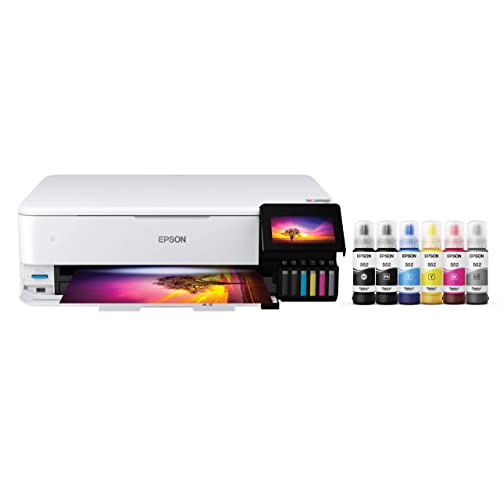
Epson EcoTank Photo ET-8550 Wireless Wide-Format All-in-One Tank Printer
Best pro-grade photo printer
$689.90
Check price on Amazon
Dell 27 Monitor S2725QS, 4K UHD IPS, 120Hz, 5ms, FreeSync Premium
Best for accurate color when editing photos
$268.99
Check price on Amazon
Epson Premium Photo Paper Glossy 8.5x11 50 sheets S041667
Best glossy paper for vivid prints
$17.73
Check price on Amazon
Epson SureColor F170 Dye-Sublimation Printer – Compact 8.5" x 11" Format – Includes Genuine Epson Ink, User Guide & Power Cable – Original OEM Product with Full Manufacturer Support
Best pro-grade photo printer
$399.99
Check price on AmazonPrices as of Oct 1, 2026, 4:40 AM UTC. Product prices and availability are accurate as of the date/time indicated and are subject to change. Any price and availability information displayed on Amazon.com at the time of purchase will apply to the purchase of this product.
Frequently Asked Questions
Everything you need to know about image conversion.