Photo to Coloring Page
Turn any picture into printable line art: clean black outlines on white, or a pencil sketch. Adjustable detail, nothing uploaded, no watermark.
Updated October 2026 · Free · Works entirely in your browser
How the line art is made
The photo is first reduced to brightness alone. Each pixel is then compared with the average of its neighbourhood (the Line detail radius): flat areas such as sky, skin and walls match their surroundings and turn white, while a pixel darker than its surroundings — the edge of a nose, a petal, a window frame — turns dark. That is the "colour dodge" trick behind every photo-to-sketch filter. For a coloring page the result is cut to pure black and white, tiny specks are deleted, and the outlines are thickened so a child's crayon can follow them.
| Setting | Lower | Higher |
|---|---|---|
| Line detail | Fine, thin outlines; picks up texture | Bolder outlines; ignores fine texture |
| Sensitivity | Only the strongest edges | More lines and some shading |
| Line thickness | Thin pen lines | Chunky lines for young children |
| Clean up specks | Keeps every dot | Removes blobs smaller than the value |
Getting a clean coloring page
- Crop to the subject. Background clutter becomes clutter on the page. The Image Cropper takes seconds.
- Brighten dark photos first. Edges are found from contrast; an underexposed photo gives broken lines. Use Brighten Image, then come back.
- Start simple for young children. Line detail 10+, sensitivity around 30%, thickness 2–3 px and clean-up 150+ gives big, simple shapes.
- Go detailed for adults. Line detail 3–5, sensitivity 60%+, thickness 0–1 px keeps fur, leaves and fabric folds.
- Save as PNG. JPG adds grey fuzz around black lines; PNG keeps them crisp for printing.
Ideas that work well
Pets are the favourite — a dog or cat photographed against a plain wall comes out as a clear outline. Kids' own drawings photographed on paper clean up into tidy line art they can colour again. Family photos make personalised party activities and birthday cards; houses and cars make good gifts for their owners. For cutting machines, turn the finished line art into a vector with PNG to SVG, using its black-and-white preset.
Gear we recommend for this workflow
As an Amazon Associate we earn from qualifying purchases. Affiliate disclosure.
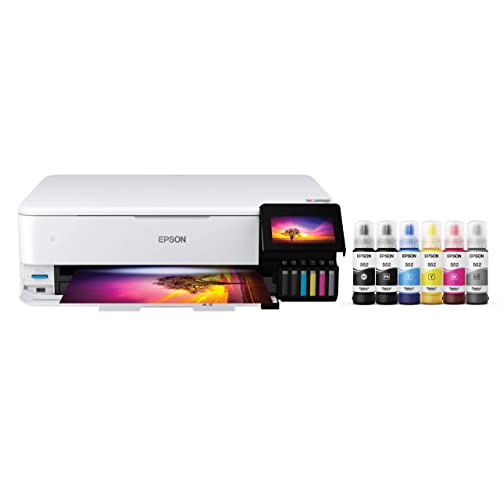
Epson EcoTank Photo ET-8550 Wireless Wide-Format All-in-One Tank Printer
Best pro-grade photo printer
$689.90
Check price on Amazon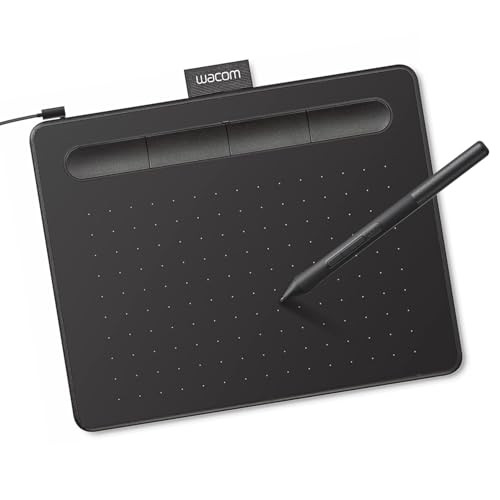
Wacom Intuos Small, Wired Graphic Drawing Tablet with Pen + Software
Best for precise retouching and illustration
$39.95
Check price on Amazon
Epson Premium Photo Paper Glossy 8.5x11 50 sheets S041667
Best glossy paper for vivid prints
$17.73
Check price on Amazon
Epson SureColor F170 Dye-Sublimation Printer – Compact 8.5" x 11" Format – Includes Genuine Epson Ink, User Guide & Power Cable – Original OEM Product with Full Manufacturer Support
Best pro-grade photo printer
$399.99
Check price on AmazonPrices as of Oct 1, 2026, 4:40 AM UTC. Product prices and availability are accurate as of the date/time indicated and are subject to change. Any price and availability information displayed on Amazon.com at the time of purchase will apply to the purchase of this product.
Frequently Asked Questions
Everything you need to know about image conversion.