JPG, JPEG, JFIF and JPE Explained
A site rejects your photo for being the wrong type. You check, and it is a JPEG. It is also a .jfif, and that one letter is the whole problem.
Updated September 2026
The short answer: JPG, JPEG, JFIF and JPE all contain identical data — the difference is only the extension. JPG exists because old Windows allowed just three letters. JFIF is the name of the container specification, and Windows and Chrome sometimes save with it. Many upload forms match on .jpg and .jpeg only, so a .jfif is rejected even though the file is a perfectly ordinary JPEG.
The short history
The Joint Photographic Experts Group published the JPEG compression standard in 1992. It described how to compress an image but not how to store one in a file, so a companion specification called the JPEG File Interchange Format — JFIF — defined the actual container. Essentially every JPEG you have ever seen is a JFIF file.
The extension varies for a much duller reason. MS-DOS and early Windows allowed only three characters after the dot, so .jpeg became .jpg. Unix systems had no such limit and kept .jpeg. Both stuck, and .jfif and .jpe turn up as well.
They are the same file
Rename a .jfif to .jpg and it still opens, because the bytes inside were always a JPEG. This is the one case where renaming an extension genuinely works — and it is the exception that proves the rule, since renaming a .heic or a .webp to .jpg achieves nothing at all.
| Extension | What it means | How common |
|---|---|---|
| .jpg | The three-letter form forced by early Windows | By far the most common |
| .jpeg | The full name, standard on Unix and macOS | Very common |
| .jfif | Named after the container specification | Occasional, and the usual troublemaker |
| .jpe | An old abbreviation | Rare |
Why you suddenly have .jfif files
This catches people out because it appears without warning. Saving an image from Chrome or Edge on Windows sometimes produces a .jfif rather than a .jpg, depending on how the server described the file and what the Windows registry has associated with the JPEG media type. It is a Windows registry quirk rather than a browser bug, and it can start happening after an update with no other change.
Everything about the file is normal. It opens in every image viewer. It just carries an extension that some upload validators have never heard of.
Fixing a rejected .jfif
- Rename it. Change .jfif to .jpg in File Explorer. You may need to turn on file extensions under the View menu first. This works because the contents really are a JPEG.
- Or re-save it. Opening the file and exporting as JPG rewrites it cleanly and removes any doubt. This is the safer option if the file is going somewhere fussy.
- Or stop it happening: in Windows, editing the registry entry that associates image/jpeg with the .jfif extension changes the default back to .jpg. Worth doing if it is constant.
What actually differs between JPEG files
Since the extensions are interchangeable, the real differences between two JPEG files are inside them, and these are the ones that affect quality and compatibility.
- Quality setting — how aggressively the encoder discarded detail. This is the big one.
- Chroma subsampling — usually 4:2:0, which halves colour resolution. Fine for photographs, visibly bad on red text.
- Progressive versus baseline — progressive files load in increasing detail and are often slightly smaller. Universally supported.
- Colour profile — an embedded profile such as sRGB or Adobe RGB. Files saved in Adobe RGB look flat in software that ignores profiles.
- EXIF metadata — camera, date, settings and often GPS coordinates.
Which extension should you use?
Use .jpg. It is the most widely recognised, it is what every upload form expects, and no system in use today rejects it. There is no technical advantage to .jpeg and a real practical disadvantage to .jfif, however standards-correct the name is.
Frequently asked questions
Is JPG the same as JPEG?
Yes, identical. The only difference is the extension. JPG exists because MS-DOS and early Windows allowed only three characters after the dot; .jpeg is the full name. Both contain exactly the same kind of data.
What is a .jfif file?
A JPEG. JFIF is the name of the container specification that defines how JPEG-compressed data is stored in a file, so almost every JPEG is technically a JFIF file. Windows and Chrome occasionally save with that extension, which is when people notice it exists.
Can I just rename .jfif to .jpg?
Yes, and this is the one case where renaming an extension genuinely works, because the contents were already a JPEG. Renaming a .heic or .webp to .jpg does not work, because those contain fundamentally different data.
Why does my upload fail when the file is a JPEG?
Because the validator is matching on the extension rather than reading the file. A form that accepts .jpg and .jpeg will reject a .jfif even though the file is identical. Renaming or re-saving fixes it.
How do I stop Chrome saving as .jfif on Windows?
It is a Windows registry association rather than a Chrome setting — the entry that maps the image/jpeg media type to a default extension. Editing that entry back to .jpg stops it. If you would rather not touch the registry, renaming after each save works too.
Is .jpe still used?
Very rarely. It is an old abbreviation that turns up in some legacy software. Treat it exactly like .jpg — same contents, same handling, and rename it if anything objects.
Keep reading
- Fix "file type not supported" upload errors
- PNG vs JPG: when to use each
- Image formats explained
- Why won’t my photo upload?
- Convert PNG to JPG
- Convert JPG to PNG
- Convert PNG to WEBP
Gear we recommend for this workflow
As an Amazon Associate we earn from qualifying purchases. Affiliate disclosure.

3 Months to No.1: The "No-Nonsense" SEO Playbook for Getting Your Website Found on Google
Best for optimizing your site's search visibility
$13.97
Check price on Amazon
Dell 27 Monitor S2725QS, 4K UHD IPS, 120Hz, 5ms, FreeSync Premium | 350 cd/m2 Brightness, 1,500:1 Contrast, 99% sRGB, Anti-Glare, HDMI, DisplayPort, USB‑C, Height Adjustable, Swivel, Pivot
Best for accurate color when editing photos
$279.99
Check price on Amazon
OCQOTAT Photography Cheat Sheet for DSLR Camera Accessories for Canon Nikon Sony,Quick Reference Cards Photographers Book for Beginners,Settings,Exposure, Modes,Composition,Lighting, etc.4×3 Inch
Best for learning photography basics
$9.99
Check price on Amazon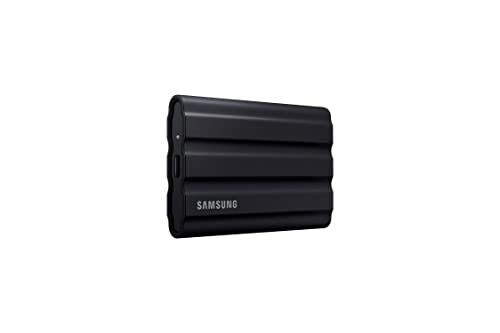
Samsung T7 Shield Portable SSD 1TB, USB 3.2 Gen 2, Up to 1,050 MB/s | Rugged, IP65 Water Resistant, External Solid State Drive for Photographers, Content Creators and Gaming (MU-PE1T0S/AM), Black
Best for photographers backing up thousands of RAW files
$267.00
Check price on AmazonPrices as of Oct 26, 2026, 4:45 AM UTC. Product prices and availability are accurate as of the date/time indicated and are subject to change. Any price and availability information displayed on Amazon.com at the time of purchase will apply to the purchase of this product.
Image Optimization Tips
Get weekly tips on image formats, compression, and web performance.
No spam, unsubscribe anytime. We respect your privacy.