Convert JPG to SVG — Real Vector Tracing
Turn a JPG into a true vector SVG made of paths, not a JPG wrapped in an SVG. Presets for logos, illustrations, line art and photos, live preview, and it all runs in your browser.
Updated October 2026 · Free · Works entirely in your browser
Raster to vector: what actually happens
A JPG is a grid of coloured pixels. An SVG describes shapes: “fill this outline with this colour”. Converting between them is called tracing or vectorising, and it happens in three steps here:
- Reduce the colours. The picture is quantised to the number of colours you pick, so each pixel belongs to one flat colour.
- Find the edges. For every colour, the borders of its regions are followed pixel by pixel, and specks smaller than the detail setting are dropped.
- Fit curves. Each border is replaced with straight lines and smooth quadratic curves, which is what makes the result scale cleanly.
JPG compression leaves faint blocky noise around edges, which a tracer would happily turn into hundreds of tiny paths. The Logo and Black & white presets snap colours to a small palette first, which cleans most of it away. If you have the original as a PNG, use the PNG to SVG converter instead — it keeps transparency and has no compression noise.
Which preset for which picture
| Picture | Preset | Colours | Detail |
|---|---|---|---|
| Logo, badge, icon | Logo / icon | 2–6 | Medium |
| Signature, handwriting, sketch | Black & white | 2 | High |
| Cartoon, flat illustration | Illustration | 8–24 | Medium |
| Photo (for a poster effect) | Photo | 16–48 | Low–medium |
Getting a clean trace
- Start big and sharp. A tiny, blurry JPG gives wobbly outlines. If yours is small, enlarge it first with the image upscaler.
- Crop to the subject. Background clutter becomes extra paths; trim it with the image cropper.
- Use as few colours as the design really has. A two-colour logo traced with 16 colours picks up every anti-aliasing shade along its edges.
- Remove a white background before tracing with Make Background Transparent, then trace the PNG.
When not to convert to SVG
Photos are the wrong job for SVG. A faithful vector photo would need tens of thousands of paths and be many times larger than the JPG. For photos on the web, a compressed WebP is smaller and sharper; keep SVG for logos, icons, diagrams and anything that needs to be cut, engraved or printed at large sizes.
Gear we recommend for this workflow
As an Amazon Associate we earn from qualifying purchases. Affiliate disclosure.
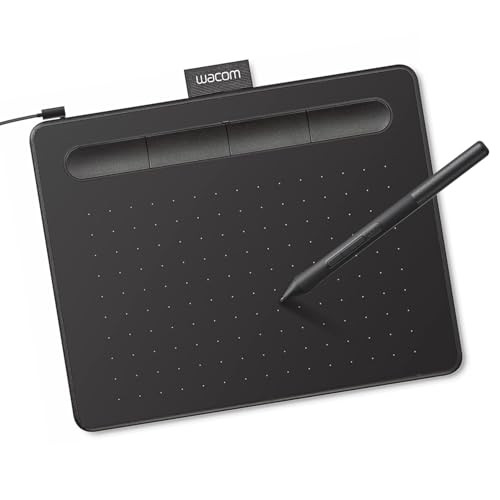
Wacom Intuos Small, Wired Graphic Drawing Tablet with Pen + Software
Best for precise retouching and illustration
$39.95
Check price on Amazon
Dell 27 Monitor S2725QS, 4K UHD IPS, 120Hz, 5ms, FreeSync Premium
Best for accurate color when editing photos
$268.99
Check price on Amazon
Wacom Intuos Pro Medium, Bluetooth Graphic Drawing Tablet with ProPen 3
Best for precise retouching and illustration
$299.95
Check price on Amazon
BenQ PD2706U Mac-Ready Monitor 27” 4K UHD, 90W USB-C, 99% sRGB, 95% P3, DeltaE ≤3, DisplayHDR 400, IPS, AQCOLOR, Factory-Calibrated, Uniformity, HotKey Puck, Ergonomic, DisplayPort, KVM, USB Hub
Best for accurate color when editing photos
$399.99
Check price on AmazonPrices as of Oct 1, 2026, 4:40 AM UTC. Product prices and availability are accurate as of the date/time indicated and are subject to change. Any price and availability information displayed on Amazon.com at the time of purchase will apply to the purchase of this product.
Frequently Asked Questions
Everything you need to know about image conversion.