Sepia Filter for Photos
Give any photo the warm brown tone of an old print — classic sepia or a darkroom-style toned print, with intensity, faded blacks and a vignette. Runs in your browser.
Updated October 2026 · Free · Works entirely in your browser
Where sepia comes from
The name is the Greek for cuttlefish, whose ink gave artists a warm brown long before photography. The photographic sepia most people picture came later, from toning: a finished black-and-white print was bleached and re-developed in a sulphide bath that turned its metallic silver into silver sulphide. That changed the colour to brown and, usefully, made the print far more resistant to fading — which is part of why so many surviving 19th- and early 20th-century photographs are brown rather than grey.
Two ways to do it digitally
Classic sepia is a fixed colour matrix published in the W3C Filter Effects specification and used by the CSS sepia() filter and most photo apps. Each output channel is a weighted mix of the input red, green and blue — red out is 0.393 R + 0.769 G + 0.189 B, for example. Because those weights add up to more than 1 for red and green, bright areas push past the top of the scale, which is why this style looks punchy and yellow, and why pure white comes out cream.
Toned print works the way the darkroom did. The image is first reduced to brightness alone (using the BT.709 weights a modern display uses), then every grey level is placed on a ramp from a deep brown in the shadows to a warm paper colour in the highlights. Nothing clips, highlight detail survives, and the result reads as a print rather than a filter.
| Setting | What it does | Try |
|---|---|---|
| Intensity | Blends the sepia version with your original colours | 100% for a full vintage print, 30–40% for a warm tint |
| Faded blacks | Lifts the darkest tones towards grey-brown, like an aged matte print | 15–30% |
| Vignette | Darkens the corners the way old lenses did | 20–40% for portraits |
Getting a convincing old-photo look
- Start from a well-exposed photo. Sepia flattens colour into tone, so a photo that is already dark gets muddy. Fix it first with the Brighten Image tool.
- Pick subjects without obvious modern details. Phones, cars and logos give the game away; people, buildings and landscapes carry it.
- Use Toned print with a little fade. Real aged prints rarely have true black. A 20% fade does more for the look than any amount of extra brown.
- Add a light vignette, not a heavy one. Early lenses fell off gently towards the corners; a strong black ring looks like an app.
- Finish with a border. A white or cream margin from Add Border to Image sells the print effect.
Sepia, black and white, or monochrome?
Black and white means no hue at all — only grey. Sepia is a kind of monochrome: one hue (brown) at different strengths. Cyanotype blue and selenium purple-brown are other monochromes. If you want neutral greys, a one-bit black and white for a stencil, or a red-filter look for dramatic skies, the Black and White Image Converter has those modes.
Gear we recommend for this workflow
As an Amazon Associate we earn from qualifying purchases. Affiliate disclosure.
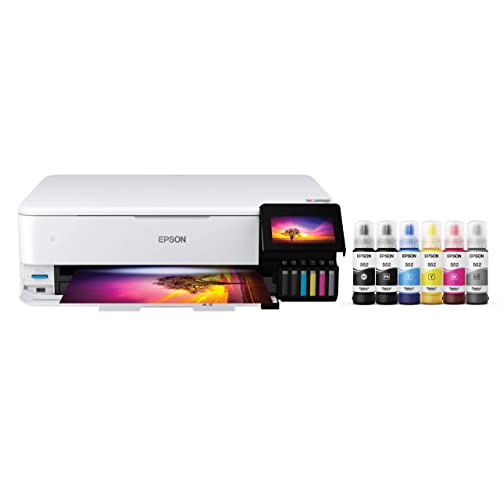
Epson EcoTank Photo ET-8550 Wireless Wide-Format All-in-One Tank Printer
Best pro-grade photo printer
$689.90
Check price on Amazon
Epson Premium Photo Paper Glossy 8.5x11 50 sheets S041667
Best glossy paper for vivid prints
$17.73
Check price on Amazon
UBeesize 14'' LED Foldable Ring Light with 62'' Tripod Stand, Selfie Ring Light for Video Recording, Live Streaming, TikTok & YouTube, Compatible with iPhone & Android (Black)
Best for even, flattering lighting
$34.23
Check price on Amazon
Epson SureColor F170 Dye-Sublimation Printer – Compact 8.5" x 11" Format – Includes Genuine Epson Ink, User Guide & Power Cable – Original OEM Product with Full Manufacturer Support
Best pro-grade photo printer
$399.99
Check price on AmazonPrices as of Oct 1, 2026, 4:40 AM UTC. Product prices and availability are accurate as of the date/time indicated and are subject to change. Any price and availability information displayed on Amazon.com at the time of purchase will apply to the purchase of this product.
Frequently Asked Questions
Everything you need to know about image conversion.