Pixel Art Image Converter
Turn a photo into pixel art. Choose the grid size and how many colours to allow, and watch it change as you drag. Nothing is uploaded.
Updated May 2026 · Free · Works entirely in your browser
Why pixel art is a downscale, not a filter
A blur filter or a mosaic effect leaves the image at full resolution and makes it look blocky. Real pixel art has genuinely few pixels, each one placed deliberately. Converting a photo properly means actually throwing the resolution away — shrinking the picture to a small grid so the browser averages fine detail into single pixels — and only then scaling it back up for display with smoothing switched off, so every pixel stays a crisp square.
That ordering matters. Upscaling with smoothing on gives you a blurry mess; upscaling with it off gives you the hard edges the style depends on.
Choosing a grid size
| Grid width | Reads as | Works for |
|---|---|---|
| 16-24 | Extremely abstract | Icons, logos, single bold shapes |
| 32 | Classic chunky sprite | Simple subjects, strong silhouettes |
| 48-64 | Recognisable but clearly pixelated | Portraits, pets, most photos — start here |
| 96 | Detailed pixel art | Scenes with more than one subject |
| 128+ | A slightly blocky photograph | When you want the hint rather than the style |
Pick the right photo
At 64 pixels wide you have roughly 4,000 pixels to tell the whole story — about the same as a postage stamp held at arm's length. Photographs that survive that reduction share three things: a single clear subject, a simple background, and strong contrast between the two. A portrait against a plain wall works beautifully; the same face in a crowded street does not.
- Crop tight before converting. Every pixel spent on background is a pixel not spent on the subject.
- Prefer side-lit or backlit subjects — the shape reads even when the detail is gone.
- Raise contrast and saturation. Both survive downscaling better than fine texture does.
- Avoid busy patterns. Stripes and small repeating textures alias badly at low resolution.
The colour limit is the retro part
Old hardware could not show many colours at once, and that constraint is a large part of why pixel art looks the way it does. The original Game Boy managed four shades of green. The NES could show 25 colours on screen at a time from a fixed palette of 54. Artists worked within those limits and developed techniques — dithering, careful ramps of three or four shades per object — that became the visual language of the medium.
Dropping the colours-per-channel slider to 4 or 6 reproduces a lot of that feeling. Leaving it high gives you blocky pixels with modern colour, which is a different and perfectly valid look — just not a retro one.
If you want the blocks but none of the palette reduction — each square keeping its true average colour, the classic mosaic or censor effect — use Pixelate Image instead. And to enlarge finished pixel art without blurring it, the image upscaler has a nearest-neighbour mode that keeps every pixel square.
Save it as PNG
Pixel art is the worst possible case for JPEG. JPEG works by discarding high-frequency detail, and an image made entirely of hard edges between flat colours is nothing but high-frequency detail. You get grey ringing around every single square, which is immediately visible and impossible to remove afterwards.
PNG stores every pixel exactly, and because the image is large blocks of identical colour, its compression works extremely well — a pixel-art PNG is often smaller than the JPG would have been anyway.
Gear we recommend for this workflow
As an Amazon Associate we earn from qualifying purchases. Affiliate disclosure.
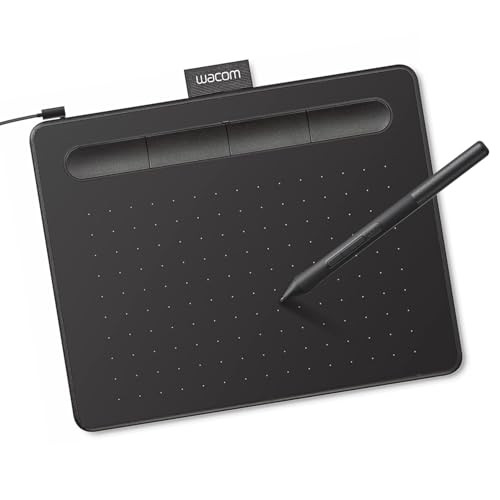
Wacom Intuos Small, Wired Graphic Drawing Tablet with Pen + Software | Battery-free pen, 4 ExpressKeys for shortcuts, works with Mac, Windows & Chromebook; Ideal for creators, students & teachers
Best for precise retouching and illustration
$39.95
Check price on Amazon
Logitech MX Creative Console 9 Customizable Keys - Graphite | Control Dial, for graphic design, Zoom and Spotify, includes 3-Month Adobe Cloud Membership, Stream Deck Accessories
Best for design shortcuts and multimedia work
$169.99
Check price on Amazon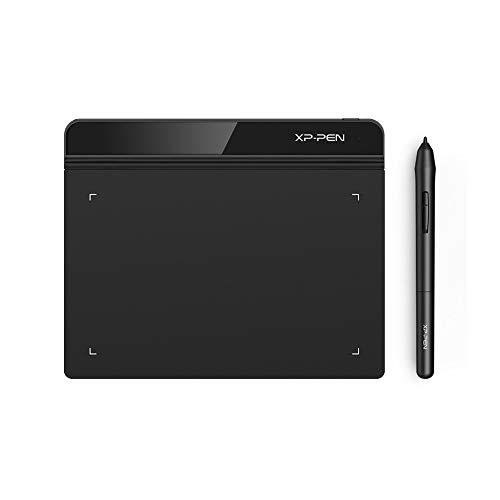
Drawing Tablet XPPen StarG640 Digital Graphic Tablet 6x4 Inch Art Tablet with Battery-Free Stylus Pen Tablet for Mac, Windows and Chromebook (Drawing/E-Learning/Remote-Working)
Best budget drawing tablet
$38.98
Check price on Amazon
Dell 27 Monitor S2725QS, 4K UHD IPS, 120Hz, 5ms, FreeSync Premium | 350 cd/m2 Brightness, 1,500:1 Contrast, 99% sRGB, Anti-Glare, HDMI, DisplayPort, USB‑C, Height Adjustable, Swivel, Pivot
Best for accurate color when editing photos
$279.99
Check price on AmazonPrices as of Oct 26, 2026, 4:45 AM UTC. Product prices and availability are accurate as of the date/time indicated and are subject to change. Any price and availability information displayed on Amazon.com at the time of purchase will apply to the purchase of this product.
Frequently Asked Questions
Everything you need to know about image conversion.