How to Batch Convert WEBP to JPG
Saving images from the web for a few months leaves you with a folder full of .webp files that half your software refuses to open. Converting them one at a time is not a plan.
Updated September 2026
The short answer: Drag the whole folder onto a browser-based converter, set the quality once, convert and take the ZIP. There is no batch limit because the decoding happens on your own machine rather than on a server. On Windows, installing the free Web Media Extensions from the Microsoft Store also lets Photos open WEBP directly if you would rather not convert.
Why you have a folder of these
Since around 2020 most large sites serve WEBP to any browser that accepts it, because it is roughly 25 to 30% smaller than an equivalent JPEG. Your browser displays it perfectly. The trouble starts the moment you right-click, Save image as, and the file lands on your desktop — where Windows Photo Viewer, older Photoshop, most print services, many CMS uploaders and a good share of marketplace listing forms all refuse it.
WEBP is an excellent delivery format and a poor handover format. That is the entire problem.
Converting the whole folder
Because the work runs in your browser there is no queue, no per-file cap and no daily limit. A few hundred files at a time is comfortable on a laptop; if a very large folder slows things down, split it into passes.
- Open the WEBP to JPG converter.
- Drag the folder onto the drop zone, or use the folder upload button.
- Set quality once — 85 to 92 covers almost everything.
- Convert, then use Download All for a single ZIP.
Things to decide before you start a big batch
The second row matters more than people expect. A folder saved from the web usually mixes photographs with logos, screenshots and diagrams. Photographs belong in JPG; anything with transparency or hard-edged text belongs in PNG, which is lossless and keeps the alpha channel. Converting the lot to JPG puts white boxes behind every transparent logo.
| Setting | Choose | Why |
|---|---|---|
| Quality | 85-92 | Redoing 500 files because you picked 60 is a bad afternoon |
| Output format | JPG for photos, PNG for graphics | JPG has no transparency and rings around hard edges |
| Resize | Off | Web images are already small; resizing loses more |
| Download | ZIP | Several hundred separate saves is unmanageable |
Or stop converting and just open them
If the only problem is that you cannot look at the files, this is less work than converting. Converting is for when something else — a print service, an upload form, a client — needs a JPG.
- Windows: install Web Media Extensions from the Microsoft Store, free, and Photos and File Explorer handle WEBP.
- macOS: Preview and Quick Look already open WEBP on recent versions.
- Any platform: drag the file onto a browser tab. Browsers display WEBP natively, which is why you have it in the first place.
- Recent versions of Photoshop, Affinity Photo and GIMP all read WEBP.
Avoiding WEBP when saving
- Right-click and Copy image, then paste into an editor. You get a bitmap rather than the original file, which sidesteps the format entirely.
- Some browser extensions request the JPEG version of an image where the site still has one. Results vary by site.
- On a phone, screenshotting and cropping produces a PNG, which is more widely accepted than WEBP even if the quality is lower.
What the conversion costs
Both formats are lossy, so converting WEBP to JPG is a second generation of lossy compression on data that has already been through one. At quality 90 that is invisible on photographs. On screenshots, logos and anything with crisp text it is worth converting to PNG instead, which is lossless and will not add ringing to text that has already been compressed once.
Expect the JPG to be roughly 25 to 30% larger than the WEBP at matched visual quality. That is the trade you are making for universal compatibility.
Frequently asked questions
How many WEBP files can I convert at once?
There is no limit set by the tool, because the conversion runs on your own device. The practical ceiling is memory — a few hundred at a time is comfortable on most laptops. Very large folders are better split into two or three passes.
Will a batch conversion upload my files?
Not with a converter that runs client-side. This one decodes in the browser: load the page, disconnect from the internet, and it still converts. Many online converters do upload, which is worth checking before feeding one a folder of your own work.
Should I convert everything to JPG?
No. Photographs, yes. Anything with transparency, hard-edged text or flat graphics should go to PNG instead — JPG cannot store an alpha channel, so transparent logos gain a white background, and JPEG compression puts visible ringing around letters.
Why is the JPG bigger than the WEBP?
Because WEBP compresses more efficiently — typically 25 to 30% better than JPEG at the same visual quality. Growing on conversion is expected and is the price of a format everything can open.
Can I open WEBP without converting?
Yes. Windows needs the free Web Media Extensions from the Microsoft Store; macOS handles it already; and any browser will display a WEBP if you drag the file onto a tab. Converting is only necessary when something else needs a JPG.
Do animated WEBP files convert?
You get the first frame only, because JPG is a still format with no way to store subsequent frames. To keep the animation, convert to GIF, or leave the file as WEBP and open it in a browser, which displays animated WEBP natively.
Keep reading
- Convert WEBP to JPG now
- WEBP images not opening? How to fix it
- Convert WEBP to PNG instead
- Batch convert images: the full guide
- What is a WEBP file?
- Convert PNG to WEBP
- Save WEBP as JPG straight from Chrome with our extension
Gear we recommend for this workflow
As an Amazon Associate we earn from qualifying purchases. Affiliate disclosure.

3 Months to No.1: The "No-Nonsense" SEO Playbook for Getting Your Website Found on Google
Best for optimizing your site's search visibility
$13.97
Check price on Amazon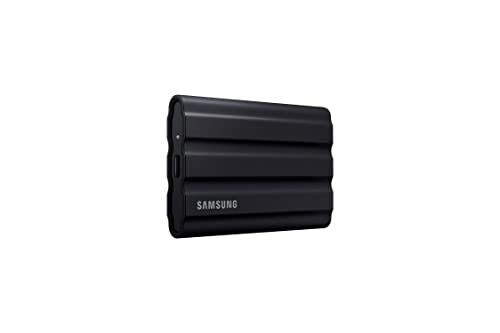
Samsung T7 Shield Portable SSD 1TB, USB 3.2 Gen 2, Up to 1,050 MB/s | Rugged, IP65 Water Resistant, External Solid State Drive for Photographers, Content Creators and Gaming (MU-PE1T0S/AM), Black
Best for photographers backing up thousands of RAW files
$267.00
Check price on Amazon
Dell 27 Monitor S2725QS, 4K UHD IPS, 120Hz, 5ms, FreeSync Premium | 350 cd/m2 Brightness, 1,500:1 Contrast, 99% sRGB, Anti-Glare, HDMI, DisplayPort, USB‑C, Height Adjustable, Swivel, Pivot
Best for accurate color when editing photos
$279.99
Check price on Amazon
Anker USB C Hub, 5-in-1 USBC to HDMI Splitter with 4K Display | 85W Max PD, 1 Powered USB-C 5Gbps & 2 Powered USB-A 3.0 5Gbps Data Ports, for MacBook Pro, MacBook Air, Dell and More (Black)
Best for connecting cards, drives and displays
$24.99
Check price on AmazonPrices as of Oct 26, 2026, 4:45 AM UTC. Product prices and availability are accurate as of the date/time indicated and are subject to change. Any price and availability information displayed on Amazon.com at the time of purchase will apply to the purchase of this product.
Image Optimization Tips
Get weekly tips on image formats, compression, and web performance.
No spam, unsubscribe anytime. We respect your privacy.